
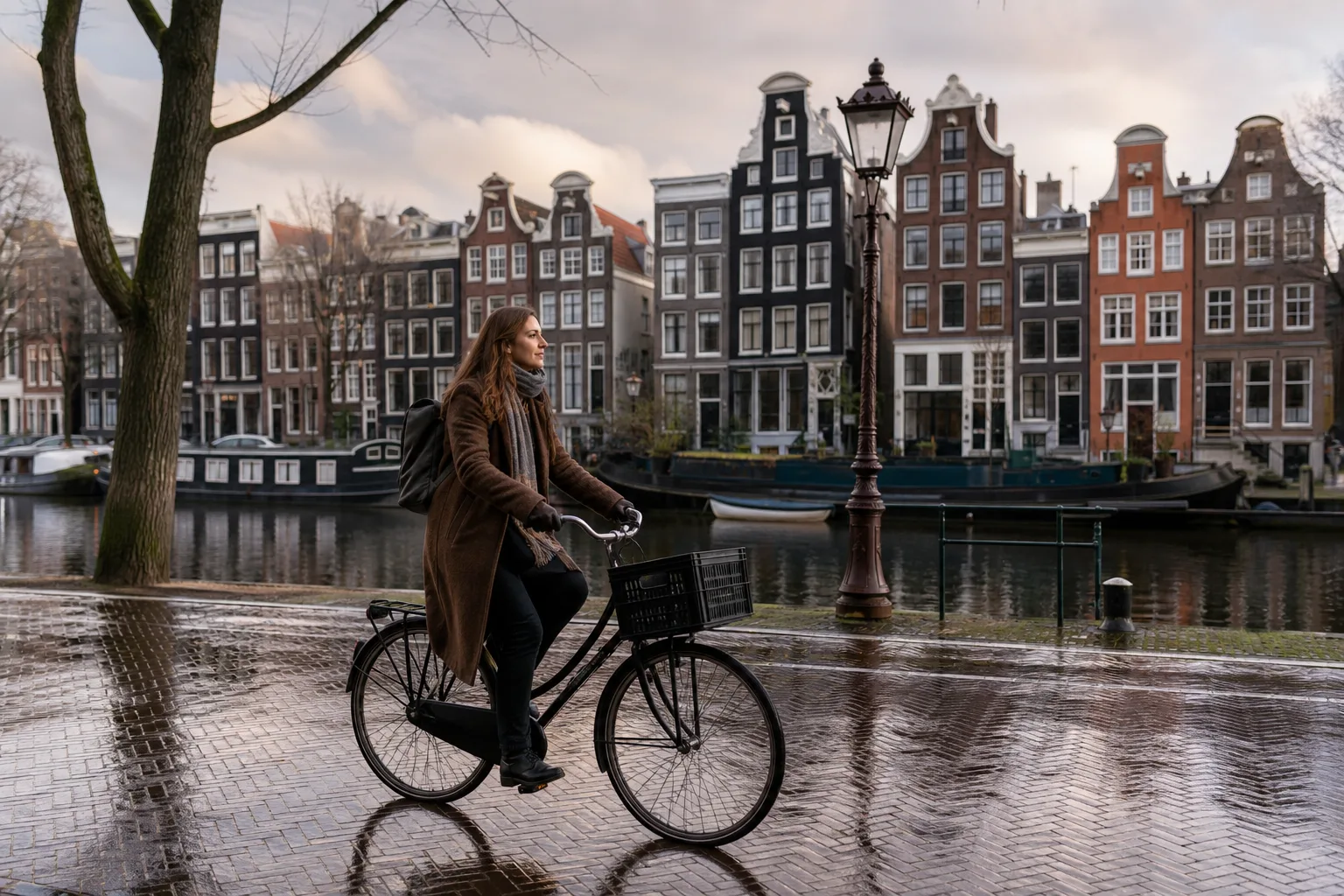
I had booked five days in Amsterdam with a precise program: two museums, some neighborhoods and a long list of photographs to do. The first morning, however, I left the accommodation and saw the city move on bikes with a naturalness that I could not follow from pedestrian. I rented a simple bike, asked an accurate explanation of the rules and spent half an hour in a quiet street before entering traffic.
At first I was rigid. I checked every turn, I was afraid to get in the way and I stopped more than I needed. Then I began to observe: signal, hold the right, do not use the phone and above all be predictable. The bike redesigned the distance between the places. Neighborhoods that on the map seemed separate became parts of the same walk.
The museum without haste
I arrived at the museum before the booked time and left my bike in the spaces indicated, checking it twice closed. I didn’t try to see everything inside. I chose a few rooms, I sat in front of the works that held me and noted impressions instead of collecting photographs. Traveling alone at that time meant being able to stay as long as I wanted it without having to justify The rhythm.
During a break I met Chiara, also she Italian and in the city for a few days. We decided to ride together to a covered market. The conversation was easy because there were no expectations: a lunch, a walk and then each one on their own way. We exchanged contacts, but the value of the meeting was already complete like this.
The rain changing perspective
On the third day it rained without interruption. I tried to resist with the hood, but after twenty minutes I had wet gloves and little patience. I came back, left my bike and took a tram to an area I didn’t consider. A small gallery, a library and a coffee overlooking the water replaced the original program.
That deviation reminded me that a city is not only known by completing a list. I spent the afternoon watching daily life, looking for details in the facades and writing. When the rain decreased, the channels reflected windows and lampposts. The best photos came when I stopped chasing them.
Move well to feel free
The bicycle was not a simple attraction. He asked me attention, respect for the rules and awareness of my limitations. I avoided the busiest hours, I didn’t pedal when I was tired and chose secondary paths. I brought a visible jacket and parked only where allowed. These precautions have given me freedom, they have not reduced it.
Last night, I slowly retraced the first day. The road was the same, but I didn’t tighten the handlebar anymore. Amsterdam had taught me a form of practical autonomy: do not do everything alone, but learn enough to choose when to continue, when to stop and when to accept the company of someone met by chance.
A city became a rhythm
I started with tickets, times and expectations; I returned with the memory of repeated gestures: check behind the shoulder, cross a bridge, lean the bike, enter a quiet room. The trip did not follow the program, but found a rhythm. It was this, more than the places marked, to make me feel free again.