
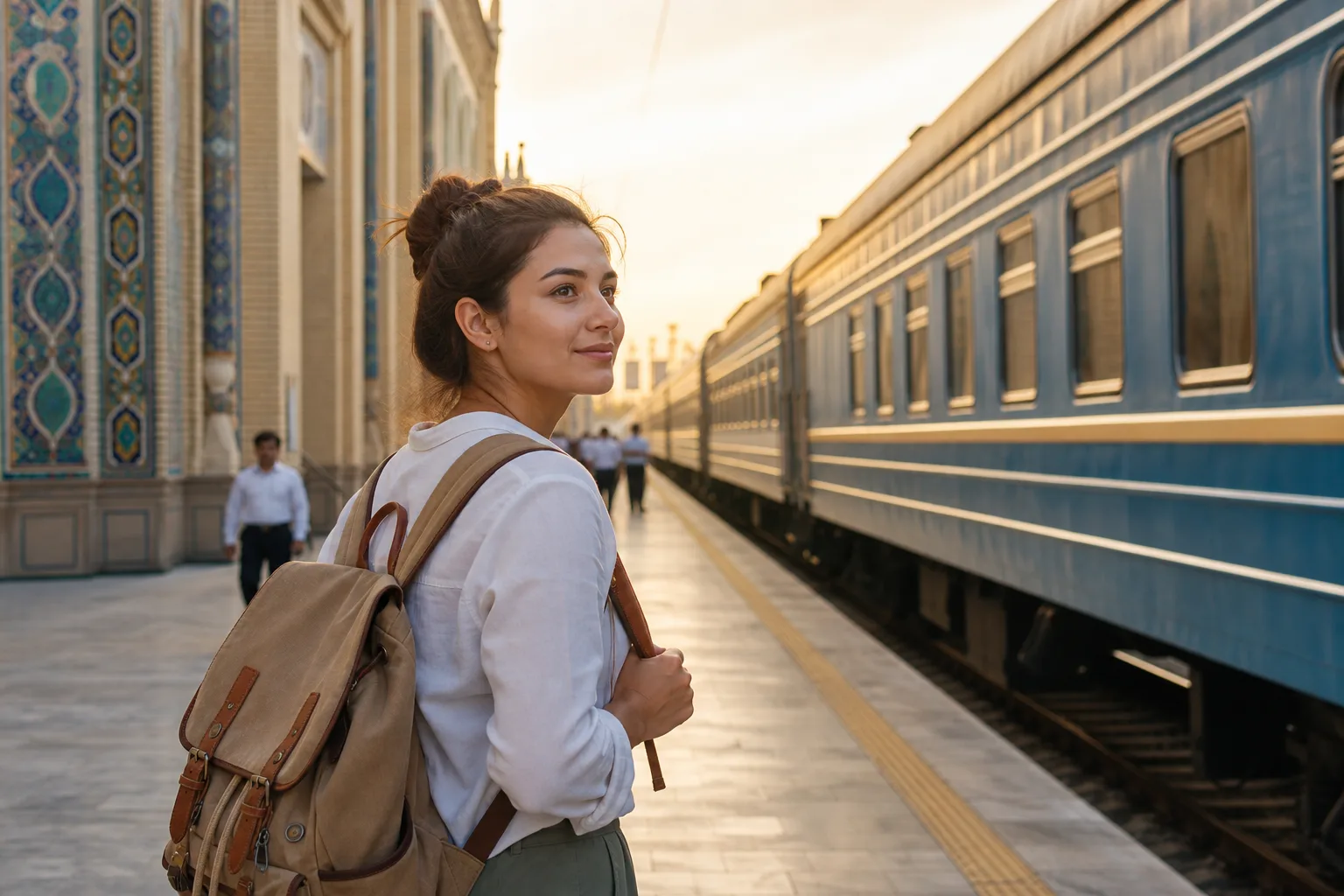
The first train left when the city was still dark. In the compartment there were a family with two children, an old man and I, with a backpack that I couldn’t fix without disturbing everyone. The embarrassment lasted little: someone moved a bag, someone else indicated me the right place and after half an hour on the coffee table were tea, fruit and bread shared.
I had chosen the train to connect the main stages without turning the journey into a ride. Distances allowed me to see the landscape change, rest and get into the cities instead of on the margins. I saved tickets and offline addresses, I came to the station in advance and brought with me something to eat: small precautions that made every move easy.
Cities beyond the first photograph
The domes and the decorated facades immediately attracted the look, but the most interesting moments arrived by getting away from the main squares. In the markets I observed the rhythm of bargaining, I asked before photographing and buying only what I could bring. A seller showed me how to choose dried fruit and laughed at my pronunciation while trying to thank her.
I traveled with a notebook and spent every afternoon in one neighborhood. This slowness helped me to distinguish cities instead of confusing them in a sequence of monuments. Each place had a different sound: bicycles, courtyards, bells, steps on the stones. I was annotating small details in the evening, because I knew it would be the first to disappear.
A night on the tracks
During the longer transfer the train stopped outside a station and the information arrived slowly. I didn’t understand the ads and the connection was weak. I showed the destination to the controller, which made me understand with a gesture that I didn’t have to go down. The compartment family offered me more tea and turned the wait into a common evening.
We arrived very late. I had alerted the accommodation before losing the signal and found someone waiting for me. That episode reminded me not to depend on one channel: written address, saved number, a small sum in cash and margin in the program. I did not miss a day; I gained a story that no guided tour could offer me.
The desert and silence
After days of town I spent one night on the edge of the desert with a small group. The landscape was essential and the cold arrived as soon as the sun went down. We had dinner early, shared blankets and turned off phones. Without close lights, distances seemed larger and slower conversations.
I wasn’t looking for a spectacular experience. It was enough to listen to the wind and see the people known on the train become familiar faces. In the morning we departed with sand in the shoes and very few words. At that time I realized that the journey had found its balance between movement and rest.
The distance approaching
Uzbekistan remained as a route made of tracks, shared tables and gestures included without a common language. The train was not only an economic or convenient means: it was the place where the journey became human. The hours between one city and another were not empty time, but the space needed to really meet someone.