
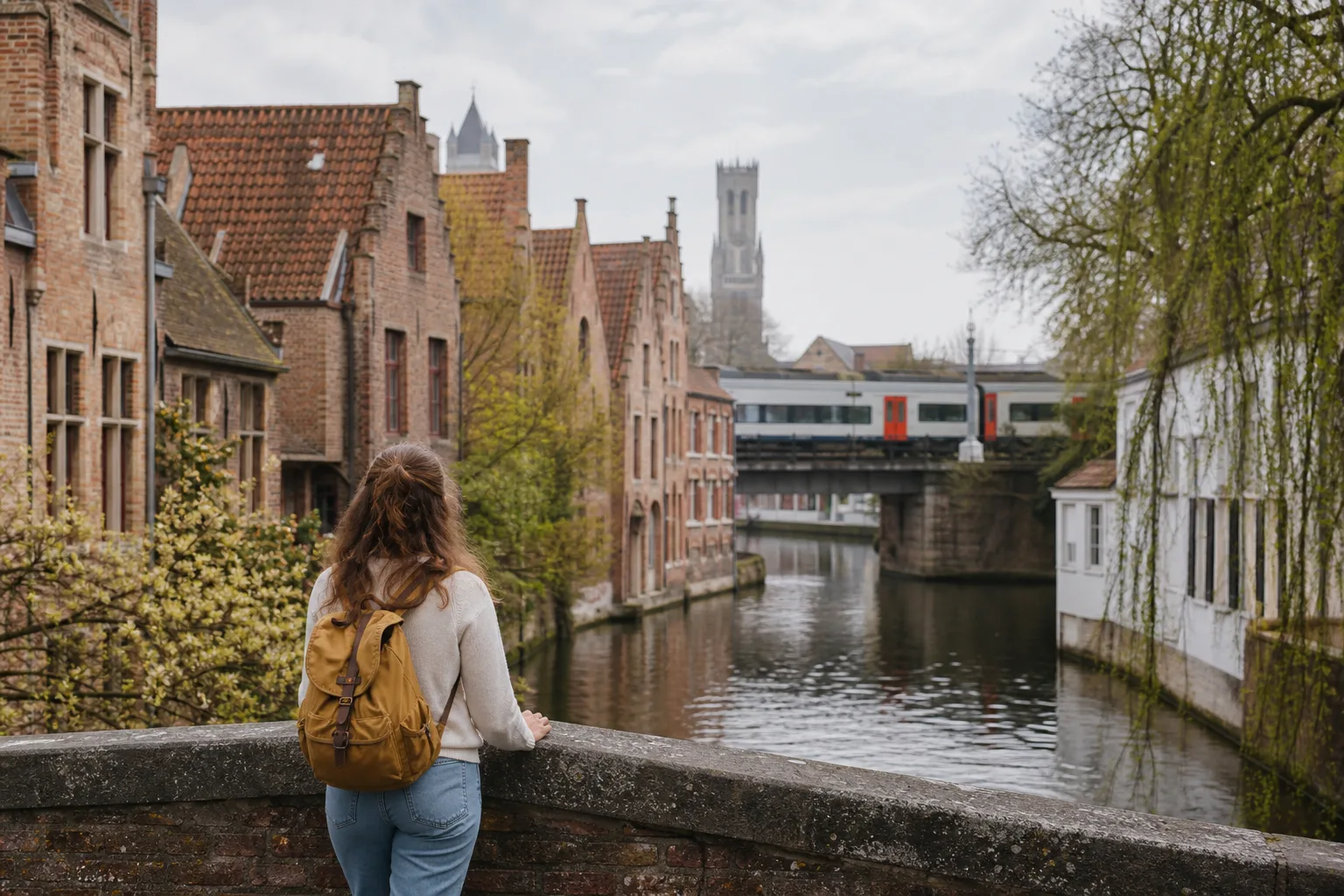
I had chosen Flanders for ease of travel: a base, frequent trains and nearby cities. The temptation was to fill every day with two destinations and three museums. I set myself a different rule: a city per day and at least one afternoon without tickets booked. I wanted art not to become a marathon.
The first train trip was so short that I almost lost the stop. Next to me there was a man who went to work and indicated me the track for the return. That ordinary gesture gave the tone to travel: moving was simple, but it required attention to destinations and coincidences, not blind to the app.
Look less, remember more
In the museums I chose few works in advance and left the rest at the meeting. After an hour I was going out, walking and going back inside if I wanted to. This alternation allowed me to connect what I saw to the streets, materials and light of the cities. The facades were not a background, but a continuation of the artistic story.
In a room I met Peter, a teacher on his own. We discussed in front of a painting and then lunched together. We met the next day in another city, each with its own program. The company worked because it did not ask to give up autonomy.
The wrong station
One afternoon I dropped a stop earlier, convinced I got here. I noticed it outside the station when the center didn’t match the map. There was no emergency: I checked the route, checked the next train and used the wait to explore the nearby neighborhood.
The error has moved the day by one hour and canceled a minor visit. In return I saw a residential area, bought bread in a neighborhood store and observed the city without monuments. It was a kind reminder: even in easy travel you have to read, but not every mistake must become stress.
Canals in the morning
Sleeping several nights in the same base allowed me to leave early with a light backpack and return without changing accommodation. The cities were quieter in the morning; I walked along the canals before the opening of the museums and photographed when the light was soft. I avoid taking bridges and steps to get the perfect shot.
In the evening I was reorganizing notes and tickets, choosing one priority for the next day. This simplicity has kept the journey fresh until the end. I didn’t feel like I had to recover something.
A nearby geography
Flanders showed me that a cultural journey does not need great distances. Short trains, walks and breaks have created an intimate geography. I came back remembering precise works, a conversation and even the wrong station. Seeing less this time meant having enough space to remember.