To avoid tourist restaurants you don’t have to find hidden places. Just read menus, context and relationship between proposal and neighborhood.
A local near a monument is not automatically bad, and a frequented by residents is not automatically suitable for you. See menu, prices, specialization, transparency and service rhythm. Too wide offer, identical photographs and insistent invitations can suggest a proposal built for quick steps.
Read the context before reviews
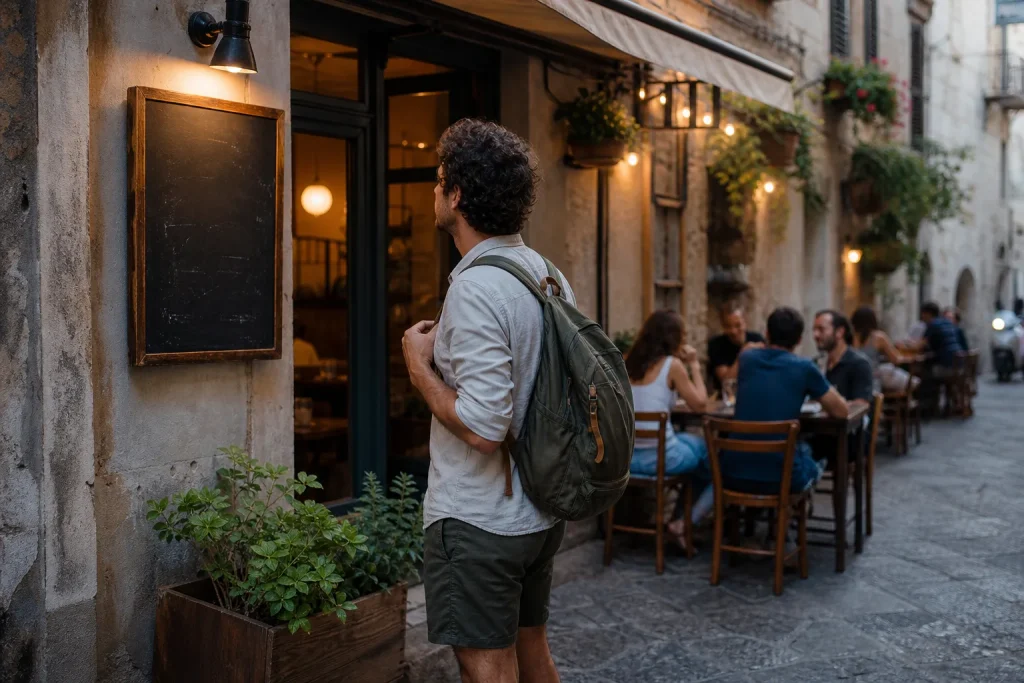
Get away from some streets from the main stream and see where people really stop. Check local meal schedules and don’t expect a full room at an unusual time. Short and seasonal menu is a good signal, but mainly counts the consistency between dishes, price and type of premises.
A practical method to apply
Save two options in different neighborhoods and leave space to discover. Read recent reviews looking for details about quality, portions and service, not only votes. Ask for advice with a specific question: simple place for lunch, vegetarian cuisine, quiet table. This produces more useful answers than “where do they eat the premises? ”.
- Two more roads: explores beyond the most crowded point without looking for isolated areas.
- Consistent menu: evaluates clarity, size and specialization.
- Time: consider local habits before judging an empty room.
- Precise question: explains budget, style and need when you ask for advice.
Errors that complicate everything
Turning each meal into an exhausting research makes it waste time and increases expectations. Even judging a place by the presence of tourists is superficial. Avoid photographing customers and staff without consent and not occupying tables for a long time in times of greater work.
The choice that really works
The good meal on the journey comes from the encounter between curiosity, budget and moment. Sometimes it will be a discovery, others a comfortable solution. Stop looking for a perfect authenticity makes it easier to recognize quality and hospitality when you find them.