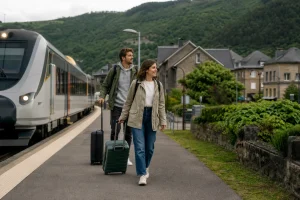

Traveling by train alone in Europe gives freedom, but requires realistic coincidences, manageable baggage and information available offline.
The advantage of the train is to arrive in the heart of cities without long procedures, but an extended network can include operators, bookings and different rules. Build the route considering exact stations, exchange time and margin to reach the track. If a coincidence is decisive, avoid the last race of the day.
Design routes that you can manage by yourself
Prefer less changes and check if the place is included or optional. A baggage that lifts without help makes stairs, corridors and coincidences much easier. Save tickets, train numbers and route between offline stations. For long stretches choose a place consistent with sleep, work or desire to observe the landscape.
A practical method to apply
It arrives in advance enough to read the boards, but not so soon to add unnecessary hours. Keep documents and values in a nearby bag, fixing the large luggage where you can check it. During a stop check first track and delay, then look for services or food. Set an alarm before the stop.
- Simple treats: reduce fragile changes and control the full name of stations.
- Autonomous baggage: only brings what you can move and lift yourself.
- Data offline: save tickets, times and address of the accommodation.
- Close values: keep documents and devices with you even when you get up.
Errors that complicate everything
Confidence that every delay is announced in your language can make you miss a change. Even taking outs or corridors with suitcases creates problems and risks. Do not go down during short stops if you do not know exactly the time available.
The choice that really works
The train allows you to see the distance and adapt the journey to your own pace. With few essential data and light baggage, even an unknown network becomes legible. The autonomy is not to know everything, but to be able to correct the path without panic.